
Civility Is Strong
Civility among Americans is in decline. Our nation is in the midst of a period of increased partisan divisiveness, and along with it, increased incivility among Americans. And this statement is not just hype. The data backs this up. A study by Pew Research showed an overwhelming 84% majority of adults say political debate has become less respectful over the last several years, while only 4% say it has become more respectful. This view is shared across all political and demographic groups. And the same 2023 report found that 78% of Americans believe political debate has become less fact-based.
How important is civility? Let’s take a look at our past. George Washington understood that civility was more than politeness, it was the foundation of orderly self-government. George Washington embraced civility as a young man, hand-copying the 110 rules from a 16th-century French Jesuit manual, “Rules of Civility and Decent Behavior in Company and Conversation.”
Washington worked to apply these rules of civility throughout his distinguished professional career, expressing concerns about the growing influence of political parties. In his farewell address, He warned that the "spirit of party" could lead to internal conflict, jealousy, and even insurrection, and that it might eventually lead to a desire for a more authoritarian leader.
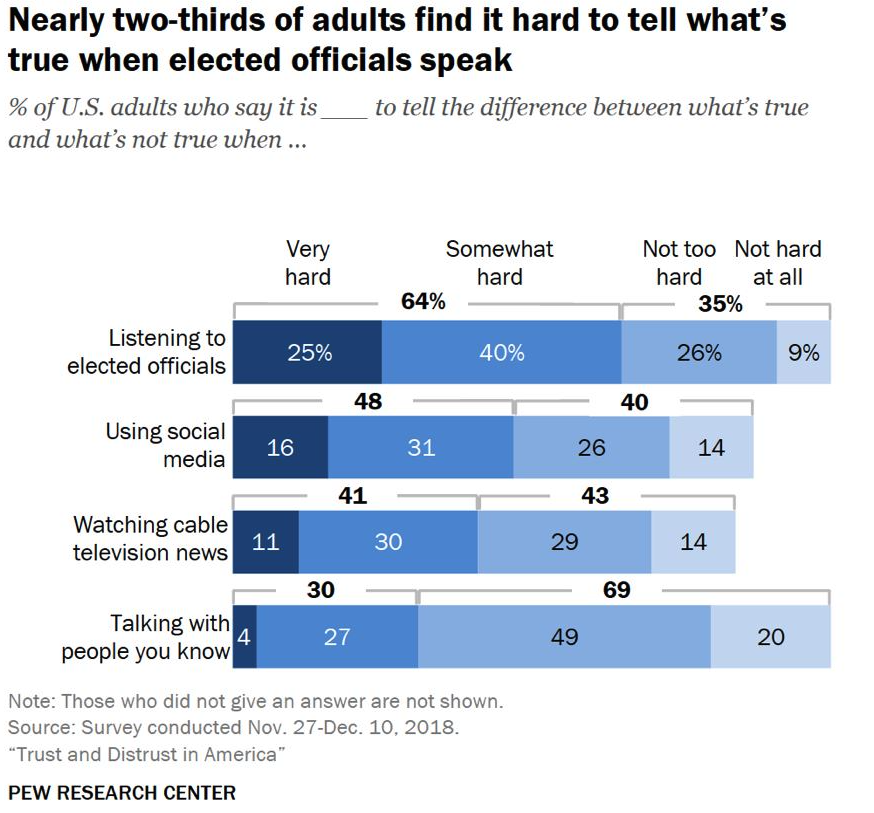
Some claim that incivility is prevalent in society due to potential benefits. Within politics, theorists and strategists often claim incivility grabs attention and stokes interest in what a politician has to say. However, studies by Pew Research verify the opposite (see the attached). Incivility diminishes overall interest in what a politician has to say because people find the incivility morally distasteful. Furthermore, incivility brings about a loss of trust, in politicians and many other institutions.
Most people agree that incivility can fire up the base. The study by William J. Brady and colleagues reinforced this view. They determined that the use of negative messages about rival political candidates containing strongly worded moral-emotional terms may spread more easily within their respective liberal or conservative social networks. In other words, incivility towards those with differing views can lead to increased incivility.
These conditions spread well beyond the political arena. A 2023 survey from the nonprofit Heterodox Academy found nearly 59% of college students were reluctant to discuss controversial topics in the classroom, where debate and disagreement should flourish as part of the educational process. Their leading concern was criticism and backlash from peers.
Similar concerns are evident in the business community. The Society of Human Resource Management (SHRM) regularly surveys their 340,000 members. A recent study reported that 44% of U.S. workers believe U.S. residents’ ability to be civil toward one another will likely get worse in 2025, citing differences in political viewpoints as driving factors. In addition, 26% of U.S. workers say they will likely leave their job in the new year because of incivility. And the cost of incivility is substantial. When the SHRM data is viewed as a subset to the entire economy, they estimate that businesses collectively lose $2.7 billion a day due to incivility causing reduced productivity and absenteeism.
A study by Pew Research found that approximately 20% of adults experienced some form of online harassment, citing politics as the reason they were targeted. Of course, young people see all of this, leading to a concern that many children will mimic adults’ behavior – both online and offline – even if they think it is wrong.
Does this mean that the future in America is bleak? Not necessarily so.The vast majority of Americans (72%) desire to be a part of the solution in restoring civility to our country, according to a new study released today by the Ronald Reagan Presidential Foundation and Institute’s (RRPFI) Center on Civility and Democracy.
We can and should bring more civility to our national discourse, and working with our young people is an appropriate place to start. Civics classes help students develop citizenship skills, participate in structured civil discourse around current issues, and study principles that unite us as Americans despite our differences.
Our political leaders may not be serving as the role models we need. But the majority of Americans indicate that they disagree with their behavior . The place to start work on promoting civility may not be at the national level. Businesses and schools can become the positive role models needed. Still, they need public support to take steps in this direction, given contrary messages from elected leaders. Civility is strong. It’s important that we lend our voice.
